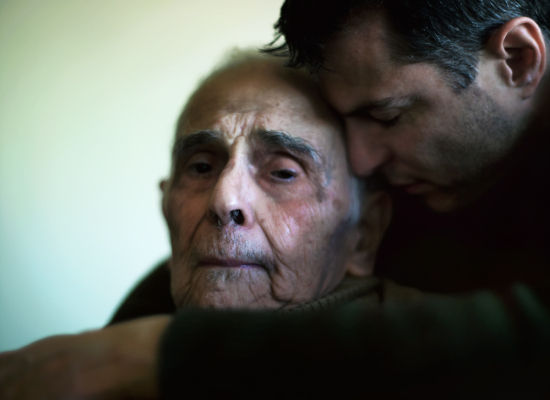
Filial piety, or Xiao, describes the duty to be good to one's parents. To support
parent's materially, and to bring honor to them emotionally is the duty
of every child. It is a lifelong duty that never ends, even after the
parent's death. Filial piety is good for the individual because it
creates virtuous people. The obligation to behave in a way that brings
honor to the family motivates virtuous behavior. This makes family a
larger priority than each individual while also reinforcing positive behavior and good decision making in the child. This, in turn, creates a
harmonious and positive society. A society of people who have a moral
responsibility to be good is one of the benefits of filial piety. Adults reap
the benefits as well when they become elders. For these reasons, I believe that Confucius was correct in teaching the duty of filial piety.
The following are quotes from Confucius which help define and describe the idea of filial piety:
"In serving his parents, a filial son reveres them in daily life; he makes them happy while he nourishes them; he takes anxious care of them in sickness; he shows great sorrow over their death; and he sacrifices to them with solemnity." Confucius This quote describes how a child is dutiful to his parents in life, and even after death. This benefits the adult child, provides a good role model for their own children, and creates good citizens, which benefits society.
"He who loves his parents
will not dare (to incur the risk of) being hated by any man, and he who reveres
his parents will not dare (to incur the risk of) being condemned by any man.
When the love and reverence (of the Son of Heaven) are thus carried to the
utmost in the service of his parents, the lessons of his virtue affect all the
people, and he becomes a pattern to (all within) the four seas. This is the
filial piety of the Son of Heaven. This quote explains how an adult child's behavior is guided by the fact that he does not want to dishonor his family. Thus, he makes good decisions that reflect well on himself and his family. This benefits society as a whole.
"They follow the course of heaven (in the
revolving seasons); they distinguish the advantages afforded by (different)
soils; they are careful of their conduct and economical in their expenditure—in
order to nourish their parents. This is the filial piety of the common people.This quote explains why adult children should be responsible when dealing with their finances so they will have the resources to care for their parents later in life. This is also beneficial to the adult child because they are being financially responsible throughout their entire life.
"The service which a filial son does to his parents is as follows: In his general conduct to them, he manifests the utmost reverence. In his nourishing of them, his endeavor is to give them the utmost pleasure. When they are ill, he feels the greatest anxiety. In mourning for them (dead), he exhibits every demonstration of grief. In sacrificing to them, he displays the utmost solemnity. When a son is complete in these five things, (he may be pronounced) able to serve his parents.This quote explains how a child must be reverent to his parents and always be concerned with their welfare. It is similar to the Christian adage "respect your elders."
"He who (thus) serves his parents, in a high situation will be free from pride, in a low situation will be free from insubordination, and among his equals will not be quarrelsome. In a high situation pride leads to ruin; in a low situation insubordination leads to punishment; among equals quarrelsomeness leads to the wielding of weapons. If those three things be not put away, though a son every day contribute beef, mutton, and pork to nourish his parents, he is not filial." This quote explains that a child should not be too prideful, should obey his parents, and should not be argumentative. These are all negative qualities that do not show respect to one's parents. Even if the child provides food for his parents, the aforementioned behaviors do not bring honor upon them.
"There are three thousand offenses against which the five punishments are directed, and there is not one of them greater than being unfilial. This quote simply says that being unfilil is one of the worst offenses that exists.
The Master said, "The teaching of filial piety
by the superior man does not require that he should go to family
after family and daily see the members of each. His teaching of filial piety is
a tribute of reverence to all the fathers under heaven. His teaching of
fraternal submission is a tribute of reverence to all the elder brothers under
heaven. His teaching of the duty of a subject is a tribute of reverence to all
the rulers under heaven.This quote explains that through teaching the duty of filial piety, these leaders are paying tribute to their elders in heaven.
A man should not be ignorant of the age of father and mother. It is a matter, on the one hand, for rejoicing and, on the other, for anxiety" This quote explains that although we may be anxious about our parents becoming old, we should be grateful that we have them and are able to still be with them in their old age. We should see their presence as a gift, not a burden or a curse.
-CONFUCIUS